Category: Novus Ordo

  • Does the Novus Ordo Need a Subdeacon

    Does the Novus Ordo Need a Subdeacon

    I originally posted this on my Substack, where I post more reflections type posts such as restoring the three hour liturgical fast.


    Recently, Cardinal Jean-Claude Hollerich suggested restoring the subdeaconate for women as a non-ordained role that would allow greater participation in the liturgy and assist in the Church’s diaconal ministry.1

    The language of “assisting the Church’s diaconal ministry” is notably broad and risks blurring the distinction between liturgical service and the diaconate itself, a distinction that remains the subject of ongoing debate.

    That proposal raises a more basic question: does the the Missal of Paul VI (often called the Novus Ordo or Ordinary Form), or the Church’s current liturgical structure, actually need the subdiaconate at all?

    (more…)
  • Paul VI and the Liturgical Reform: Documented Papal Interventions in the Novus Ordo

    Paul VI and the Liturgical Reform: Documented Papal Interventions in the Novus Ordo

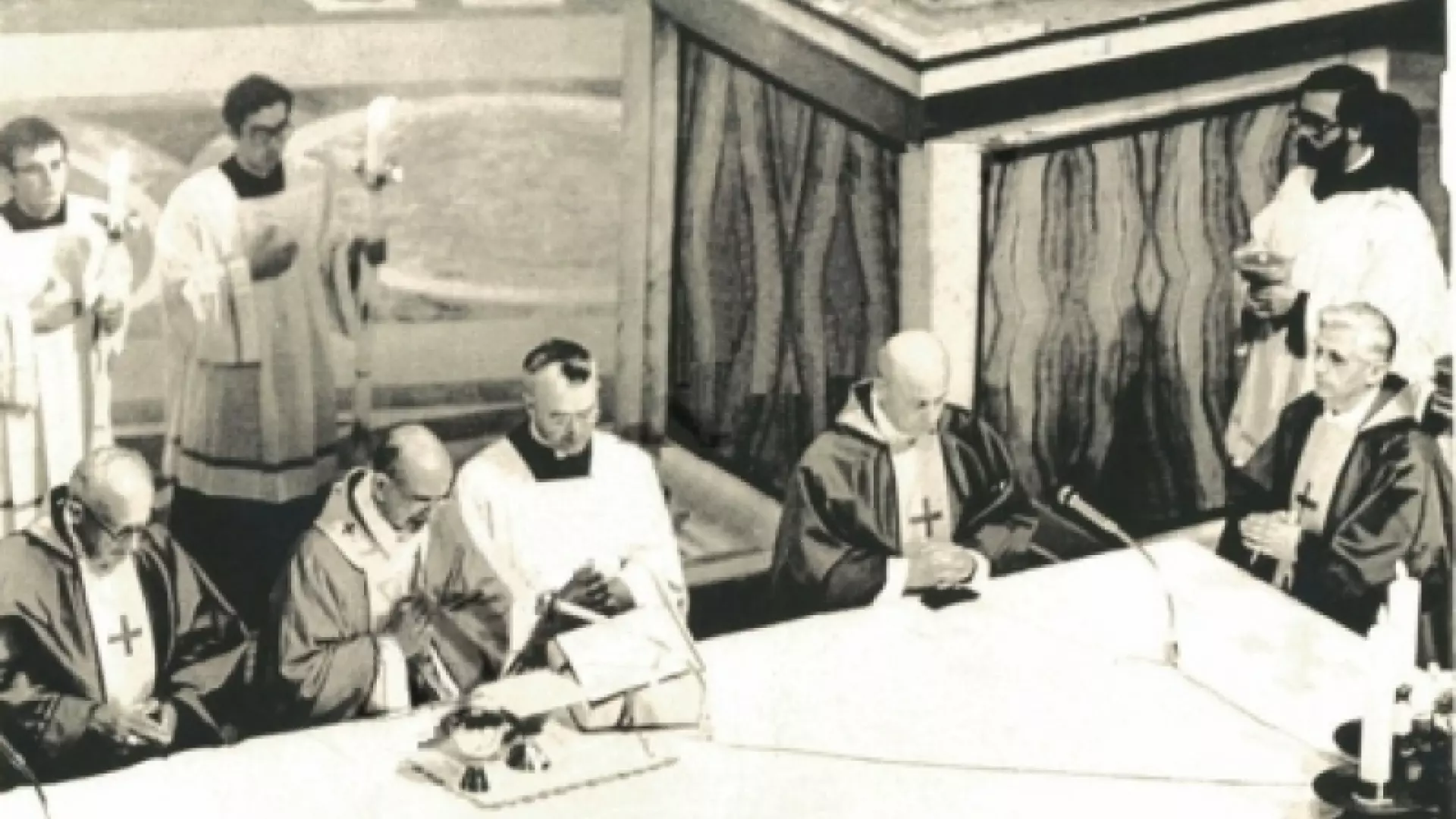
    I often come across different stories of matters that Pope Paul VI intervened in regarding the reform of the liturgy to prevent certain traditional elements from being cut.

    Dom Alcuin Reid asserts that Pope Paul VI personally intervened during the preparation of the 1969 Ordo Missae to insist on the retention of the sign of the cross at the beginning of Mass, a Confiteor, the Orate fratres, and the Roman Canon. Reid presents this as a corrective to the more radical “normative Mass” drafts circulating prior to the 1967 Synod of Bishops, though he does not cite specific documentary evidence for these interventions in his article.[i]

    I wanted to start with Dom Reid’s list because it provides a short list that can be verified. Dom Reid is a serious liturgical scholar, and it is possible that he has access to schemata or archival materials not readily available. Nevertheless, his list provides a useful starting point for claims that can be tested against the published documentary record. In the course of examining these claims, I also identified additional instances of papal intervention or preference not mentioned by Reid but documented elsewhere in the contemporary sources; these are included here and categorized according to the same evidentiary standards. That said, I am going to approach this by grouping these claims into different categories. 1) Documented Papal Interventions, 2) Plausible but Inferential Interventions, 3) Requested but Not Retained, and while not tied to Dom Reid’s article, 4) Documented Papal Dissatisfaction.

    (more…)
  • Quiet Repairs: Small Liturgical Changes That Could Restore Reverence in the Novus Ordo

    Quiet Repairs: Small Liturgical Changes That Could Restore Reverence in the Novus Ordo

    Many traditionally minded Catholics assume that the “Reform of the Reform” is effectively dead.  As a result, most proposals for reform focus on highly visible changes to make it similar to the TLM: ad orientem, chant, the suppression of Communion in the hand, the elimination of extraordinary ministers of holy communion, or only using the Roman Canon, etc.

    These proposals all concentrate on what the congregation sees and hears: posture, music, language, and distribution. Implemented top-down, they would almost certainly provoke resistance from both clergy and laity. The present generation has little living memory of the pre-Vatican II rite, and abrupt external changes risks accusations that Rome is attempting to reverse the Council.

    There is an easier path, and one more likely to bear fruit over time. It focuses on the priest and deacon first, not the people. It accepts the structure of the current Roman Missal while quietly re-forming the sacred ministers’ understanding of who they are and what they are doing.

    Most of what follows does not alter lay participation. Little of it requires catechesis. These are internal, clerical changes that would slowly reshape how the Mass is understood and celebrated from the altar outward.

    (more…)