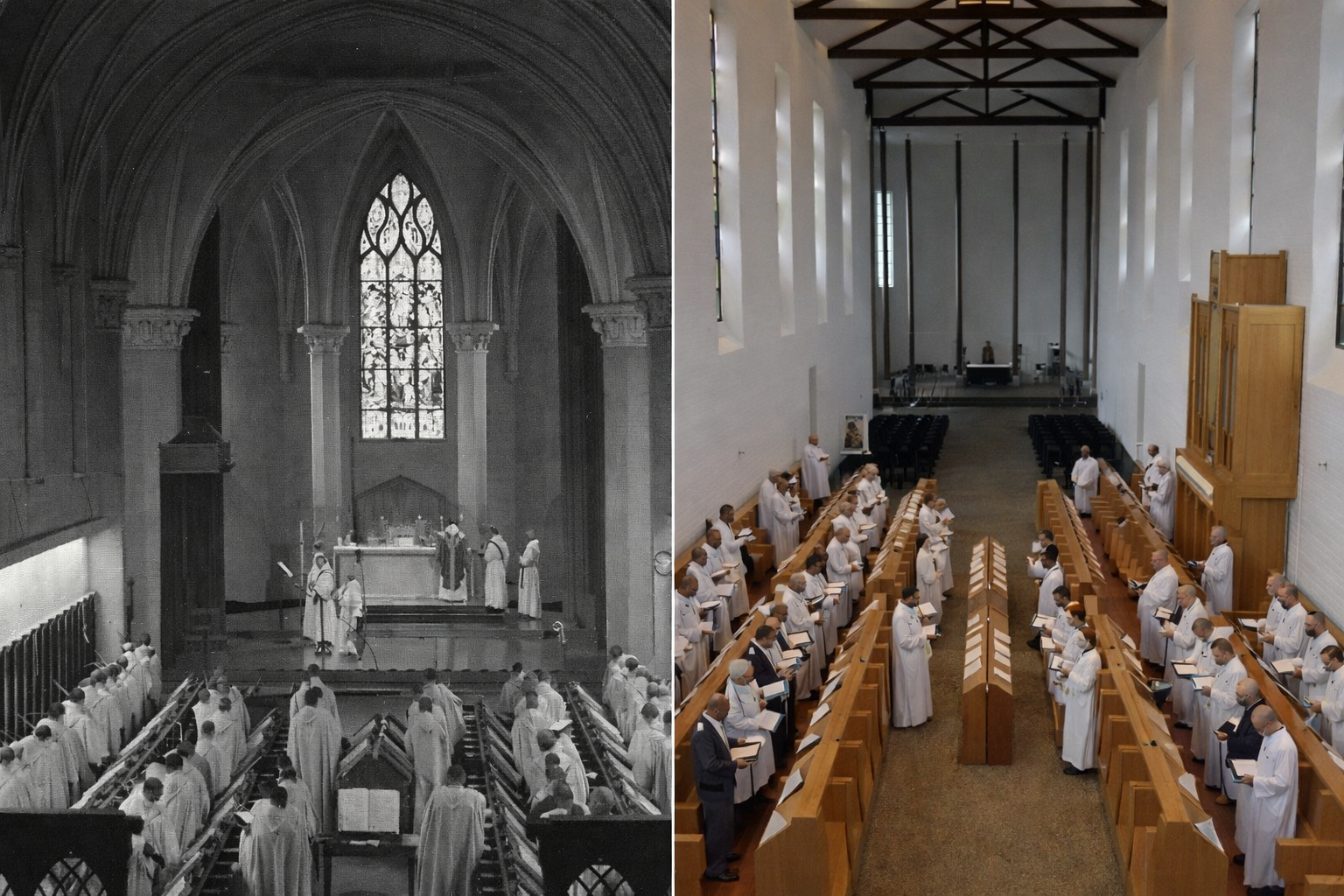
One of the central failures of the liturgical reform of the 1960s was not change itself, but the absence of explanation.
Vatican II clearly called for a reform of the liturgy. That is not in dispute. Sacrosanctum Concilium explicitly authorized revision of the rites, simplification, and a greater intelligibility for the faithful.[i] What remains largely unexplained is why the reform took the particular shape it did, especially when the interim Missal of 1965 already implemented many conciliar directives.
The Council itself imposed limits. It insisted that rites “be distinguished by a noble simplicity,” and that nothing new be introduced “unless the good of the Church genuinely and certainly requires it.”[ii] Reform was to proceed organically from existing forms, not through wholesale reconstruction.[iii] Yet the most visible changes affecting the faithful went far beyond modest simplification.
The problem is not simply that things changed. It is that the Church rarely explained why particular changes were better.
Why was it preferable for the priest not to genuflect immediately after the consecration, as had long been customary?
Why was standing judged superior to kneeling for the reception of Holy Communion?
Why was the traditional genuflection at Et incarnatus est replaced with a bow?
Why were numerous signs of the cross removed from the Canon?
Why was it pastorally necessary to introduce multiple Eucharistic Prayers alongside the Roman Canon?
These are not trivial ceremonial details. They are embodied acts of worship that shape belief through repetition. Yet for many of these changes, no sustained theological or pastoral rationale was ever clearly articulated to the faithful.
In practice, the explanation often amounted to an appeal to authority: this is what Vatican II called for, therefore it must be accepted. But Vatican II itself envisioned an educated laity capable of understanding the liturgy more deeply, not merely submitting to unexplained alteration.[iv] Appeals to obedience alone sit uneasily with the Council’s own emphasis on conscious and informed participation.
Today, the most common justification offered is that the older liturgy does not reflect the Church’s post–Vatican II ecclesiology. This is stated most clearly in Pope Francis’s document on the liturgy Desiderio desideravi[v], and again in Cardinal Roche’s intervention at the January 2026 Consistory. Yet this claim is rarely unpacked. What precisely changed in ecclesiology? In what way did that development require the suppression or alteration of ancient ritual gestures and massive renovations of churches? On these questions, official explanations remain vague or nonexistent.
This failure to explain the why behind liturgical change has consequences. It fosters suspicion rather than trust. It encourages the faithful to question not only the liturgical reform, but other conciliar teachings that are likewise asserted without careful clarification. When explanations are absent, people supply their own narratives, often in ways the Church does not intend or want. It is no accident that, in traditionalist circles, one frequently encounters claims that Archbishop Annibale Bugnini was a Freemason intent on destroying the Church. Whether such claims are true is beside the point. This ideas incubate and grow in a Church that appeals to authority rather than offering explanations.
A sustained effort to explain the theological and pastoral reasoning behind specific liturgical decisions would not eliminate disagreement. But it would go a long way toward restoring credibility, clarifying what the faithful are actually bound to believe, and narrowing the disputes that continue to surround Vatican II.
[i] Sacrosanctum Concilium (1963), nn. 21, 25, 34.
[ii] Sacrosanctum Concilium, n. 34; n. 23.
[iii] Sacrosanctum Concilium, n. 23: “there must be no innovations unless the good of the Church genuinely and certainly requires them; and care must be taken that any new forms adopted should in some way grow organically from forms already existing.”
[iv] Sacrosanctum Concilium, n. 14; cf. n. 48, which presumes a laity capable of understanding and consciously engaging the rites.
[v] §31 of Desiderio desideravi (29 June 2022)
Leave a Reply